Durable Graphic Hoodies for Daily Wear: 2026 Guide

Last Updated: October 23, 2026
Quick Summary
Durable graphic hoodies for daily wear combine heavyweight fabric of 10 oz/yd² or more, a print method that bonds to the material, and double-stitched seams that survive repeated washing. Check fabric weight, fiber content, and print method before buying, then wash cold, inside out, and air-dry to protect the graphic.
Fabric weight is the single best predictor of how a hoodie will age, measured in oz/yd².
Pullover hoodies beat zip-ups on durability because fewer seams and no zipper mean fewer failure points.
Wash graphic hoodies in cold water, inside out, and skip fabric softener and dryer sheets entirely.
Cost per wear is purchase price divided by the number of times you actually wear the garment.
Search a product's reviews for the word wash to learn how it held up over time.
Table of Contents
What Makes Graphic Hoodies Durable for Daily Wear
Durable graphic hoodies for daily wear are built on three things: heavy enough fabric to resist pilling and thinning, a print method that bonds to the material rather than sitting on top of it, and construction details that survive repeated washing. Most hoodies fail on one of those three, usually the print.
The framework below works no matter where you shop, use it to judge a hoodie before you spend money and after it arrives.
Graphic hoodies are sweatshirts with printed, embroidered, or appliquéd artwork on the chest, back, or sleeves.
Most guides rank hoodies by how they look in a photo, which tells you almost nothing about durability. A crisp print on thin fabric will look great for six weeks and terrible by month four.
Key Takeaway Judge a hoodie by fabric weight (measured in oz/yd²), print method, and stitching, in that order. Appearance is the last thing to evaluate, not the first.
Fabric Weight and Construction That Hold Up
Fabric weight is the single best predictor of how a hoodie will age. Manufacturers measure it in ounces per square yard (oz/yd²), and the number tells you how much material you're getting.
Under 7 oz/yd²: Lightweight. Fine for layering or warm weather, but prone to thinning and stretching out at the cuffs.
7 to 9 oz/yd²: Midweight. The most common range for everyday hoodies. Reasonable durability if the stitching holds.
10 oz/yd² and up: Heavyweight. Holds a sturdy drape, resists pilling, and keeps its shape through many wash cycles.
Construction matters as much as weight. Look for double-stitched seams at the shoulders and armholes, ribbed cuffs and hem that snap back rather than sag, and a lined hood with a real drawcord channel.
The Best Fabric for Hoodies: Cotton, Blends, and What Lasts
The best fabric for hoodies is a cotton-rich blend because it balances softness, shape retention, and print adhesion. Pure cotton feels best against skin but shrinks and wrinkles more.
Here's how the common options compare:
Fabric | Feel | Shrinkage | Print Adhesion | Best For |
100% cotton | Soft, breathable | Higher | Excellent | Print-focused hoodies |
80/20 cotton-poly | Soft with structure | Low | Excellent | Everyday wear |
50/50 blend | Smooth, uniform | Low | Good | Budget-friendly basics |
Tri-blend | Very soft, drapey | Low | Good | Vintage-inspired looks |
"Premium quality" on a tag means nothing. Check the fiber content on the care label yourself, and look for combed or ring-spun cotton, ring-spun yarn is smoother, stronger, and holds up better to washing than open-end yarn.
Pullover vs. Zip-Up: Choosing a Daily Wear Style
Pullover hoodies win on durability and warmth. Fewer seams and no zipper means fewer failure points, and the kangaroo pocket on a pullover is usually reinforced with bar tacks at the stress corners.
For daily wear, we'd pick a pullover unless you specifically need temperature control through the day. Zippers are the first thing to fail on a zip-up: the tape pulls away from the fabric, or the slider jams.
Print Methods That Keep Graphics From Fading or Cracking
Print method determines whether your graphic survives fifty washes or peels off in a sheet. There are four methods you'll encounter in graphic hoodies, and they behave very differently.
Screen printing pushes thick ink through a mesh stencil.
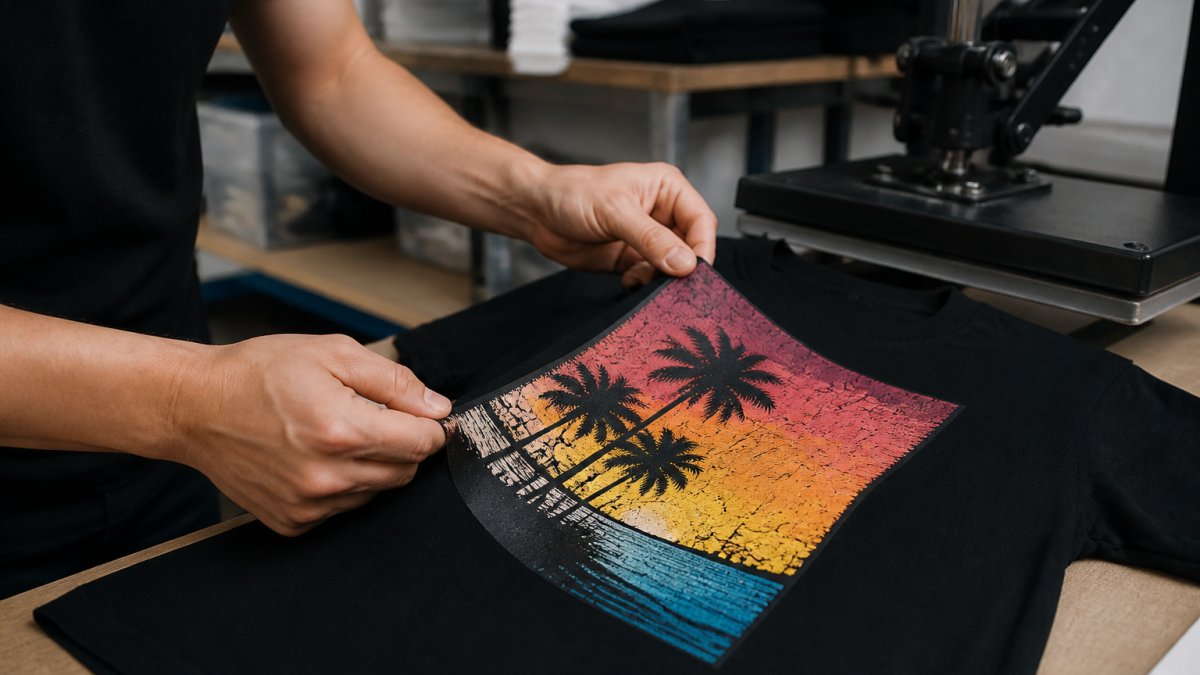
DTF (Direct to Film) prints the design onto a film, then heat-presses it onto the garment.
DTG (Direct to Garment) prints ink directly into the fabric like a printer.
Vinyl and heat transfer cut shapes from colored film. Cheap, fast, and the first to crack at the edges.
Watch Out The most common print failure is under-curing, not bad artwork. A print that wasn't cured at the right temperature for the right time will crack within a few washes no matter how good the design is.
How to Wash Graphic Hoodies Without Ruining the Print
Most print failures happen in the laundry, not on the press. Heat, agitation, and the wrong chemistry break down the ink-to-fabric bond faster than everyday wear does. The routine below protects that bond, with slight adjustments depending on how your graphic was applied.
Why prints fail in the wash
A cured plastisol screen print sits on top of the fabric as a flexible film. A DTF transfer is a printed film adhered with a heat-activated adhesive. A DTG print is ink bonded directly into the fibers. Each one fails differently:
Screen print cracks when the ink film loses plasticizer and flexes repeatedly, hot water and high dryer heat accelerate this.
DTF lifts at the edges when the adhesive is weakened by heat, fabric softener, or repeated agitation against zippers and velcro.
DTG fades when undyed cotton fibers abrade or when detergent residue traps soil in the print area.
That's why "wash cold, inside out" isn't folklore, it's the lowest-effort way to slow all four failure modes at once.
The wash routine, step by step
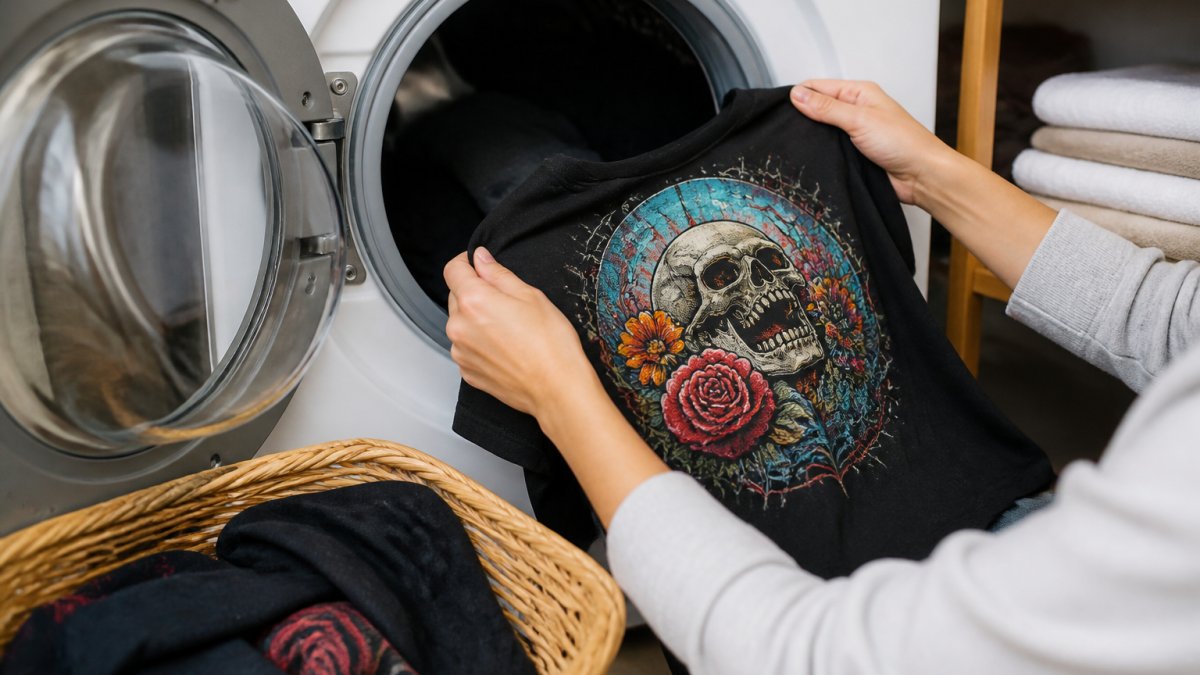
Turn the hoodie inside out before washing, this puts the print against itself instead of against the drum and other garments.
Use cold water, never above 86°F. Most detergents clean adequately cold; heat is what ages the print and cuff elastic.
Wash graphic hoodies separately from items with zippers, hooks, or velcro. One open zipper can abrade a print across an entire load.
Print-method-specific care notes
A few adjustments matter depending on what you bought:
Screen-printed hoodies tolerate more washing than the other methods, but the ink film still benefits from cold water and air-drying. Avoid stacking heavy items on a folded screen print for long periods, the film can take a set.
DTF-printed hoodies should be washed inside out and dried on low or air-dried. Avoid fabric softener specifically, because it is the most common cause of edge lift on DTF transfers.
DTG-printed hoodies benefit from washing inside out and from avoiding high-efficiency (HE) detergent overdosing, which leaves residue that dulls the print.
Storage that protects the graphic
Storage matters almost as much as washing. Fold graphic hoodies rather than hanging them on wire hangers, which stretch shoulders and crease back prints. Keep them out of direct sunlight and damp basements, where mildew stains fabric and print. When stacking, put the heaviest at the bottom and avoid compressing a print under a heavy pile for months.
Pro Tip If a print does start to crack at the edges, a low-heat press with a pressing cloth can sometimes re-bond a DTF edge.

A note on dry cleaning
Most graphic hoodies don't need dry cleaning, and dry-cleaning solvents can attack some print adhesives. If a care label recommends it, ask the cleaner whether they have experience with printed apparel first.
Sizing, Fit, and Comfort Across Body Types
Sizing is where online hoodie shopping goes wrong most often. A hoodie should fit true to size, with enough shoulder room to raise your arms without the hem lifting past your waistband.
Get three measurements before you buy: chest width (flat, pit to pit), body length (high point of shoulder to hem), and sleeve length. Compare them against a hoodie you already own and like, this beats any S/M/L size chart, since those labels vary wildly between manufacturers.
Fit guidance by body type:
Broad shoulders: Look for raglan sleeves or a relaxed cut, which give more room through the shoulder without a boxy body.
Longer torso: Check body length specifically. A hoodie that ends at the hip bone will ride up when you sit.
Petite frames: A relaxed fit can swallow you. Check the chest width, not just the length.
Spotting High-Quality Graphic Hoodies Before You Buy
High-quality graphic hoodies show specific, checkable signs: fabric weight listed in oz/yd², fiber content on the label, double-stitched seams, a print method named on the product page, and a care guide that addresses the print. If a product page hides all five, that's your answer.
Run this checklist before you check out:
Fabric weight stated in oz/yd² (not just "heavyweight")
Fiber content listed (e.g., 80% cotton / 20% polyester)
Print method named (screen print, DTF, DTG, or vinyl)
Pro Tip Search the product's review section for the word "wash" rather than reading the top reviews. Reviews that mention how a hoodie held up after several washes tell you more about durability than any five-star rating written on delivery day.
Cost Per Wear: Why Durability Beats a Low Sticker Price
Cost per wear is the purchase price divided by the number of times you actually wear the garment. It's the only pricing metric that accounts for how long a hoodie lasts, and why a $70 hoodie can be cheaper than a $35 one.
Worked example
Take two hoodies worn twice a week for six months of the year, roughly 52 wears per year.
Hoodie A: $35, lightweight, single-stitched, vinyl graphic. Realistic lifespan with daily-wear rotation: about one season before pilling, seam stress, and edge lift make it a house hoodie. Cost per wear: about $0.67 over 52 wears.
Hoodie B: $70, heavyweight (10 oz/yd² or better), double-stitched, screen-printed or well-cured DTF. Realistic lifespan: three to four years of the same rotation before the graphic or seams fail. Cost per wear: about $0.34 to $0.45 over 156 to 208 wears.
Hoodie B costs twice as much up front and roughly half as much per wear. Factor in replacements and it flips harder: three Hoodie A purchases cost $105 over the same period and still leave you with a worse garment in year three.
Lifespan benchmarks by construction tier
These are planning ranges, not guarantees, how you wash and how often you wear a hoodie move the number significantly.
Construction tier | Typical lifespan (2x/week rotation) | Common failure point |
| 1 season (about 50 wears) | Cuff stretch, edge lift, pilling |
| 1.5-2.5 years (about 75-130 wears) | Print fade, hem sag |
Heavyweight (10 oz/yd²+), double-stitched, cured DTF | 3-5 years (about 150-260 wears) | Print cracking at high-flex areas, drawcord wear |
A hoodie that gets washed after every wear will land at the low end of its range. A hoodie rotated with others and air-dried will land at the high end.
How to run the comparison yourself
Before you buy, write down three numbers for each candidate hoodie:
Price. The full delivered price, including shipping and tax.
Realistic wears per year. Be honest, a hoodie you love gets worn more than one you bought on impulse.
Expected lifespan in years. Use the construction tier above as a starting point, then adjust down if the product page hides fabric weight or print method.
Divide price by (wears per year × lifespan in years). The lower number is the better value, provided the hoodie actually fits and you will wear it.
The hidden costs of a cheap hoodie
A low sticker price hides three costs that don't show up at checkout:
Replacement cost. A hoodie that fails in one season means buying again next year, often at a higher price.
Wardrobe friction. A hoodie that pills or fades gets pushed to the back of the drawer, so you paid for fewer wears than you planned.
Print failure. A cracked graphic makes the whole garment look worn out even when the fabric is sound, shortening the hoodie's useful life to the life of the print.
Key Takeaway Cost per wear is the only price comparison that matters for daily wear. A heavyweight hoodie worn 150 times can cost less per wear than a lightweight hoodie worn 50 times, and it looks better the whole time.
When the cheap hoodie is the right call
A lower-cost hoodie makes sense for a graphic you'll wear one season, a fit you're testing before committing to a brand, or messy work where print longevity isn't the priority. Expensive doesn't always win, just know which trade-off you're making. Paying less up front for a shorter lifespan is legitimate as long as the math is deliberate rather than accidental.
Frequently Asked Questions
What is the most durable hoodie fabric for everyday wear?
Heavyweight cotton or a cotton-polyester blend holds up best for daily wear. Look for fabric weights around 8 to 12 oz, which resist pilling and keep their shape through repeated washing. A sturdy cotton blend also gives the hoodie a solid drape, so it doesn't stretch out at the elbows or hem. Lighter fabrics feel softer at first but tend to thin out faster. Checking the fabric weight and blend before you buy is the quickest way to judge whether graphic hoodies will last more than a season.
How can you keep a graphic hoodie from fading or cracking?
Wash graphic hoodies inside out in cold water and skip the dryer's high heat. Heat is what breaks down printed graphics, so air drying or a low tumble setting protects the print. Avoid fabric softener, which can weaken the bond between the ink and the fabric. When you wash graphic hoodies, use a gentle cycle and turn them inside out to reduce friction against the print. Following these steps keeps colors bold and the print flexible instead of stiff or cracked.
Are printed hoodies durable enough for everyday wear?
Yes, if you choose the right construction. High-quality graphic hoodies use heavyweight fabric and a print method like DTF that bonds flexibly to the material, so the design moves with the garment instead of flaking off. The two variables that matter most are fabric weight and print quality. A well-made hoodie worn daily and washed correctly can hold its shape and graphics for years. Cheaper options with thin fabric and stiff prints tend to fail within months of regular use.
Is it okay to wear a hoodie every day?
Wearing a hoodie daily is fine as long as you rotate between a few and wash them regularly. Giving each hoodie a rest between wears helps the fabric recover its shape and slows wear at high-friction spots like cuffs and elbows. For daily wear, pick durable graphic hoodies with sturdy stitching and a mid-to-heavy fabric weight. Owning two or three and alternating them extends the life of each one and keeps the graphics looking fresh longer.
Comments